health9 min
BMI: What the Numbers Actually Mean (and What They Don't)
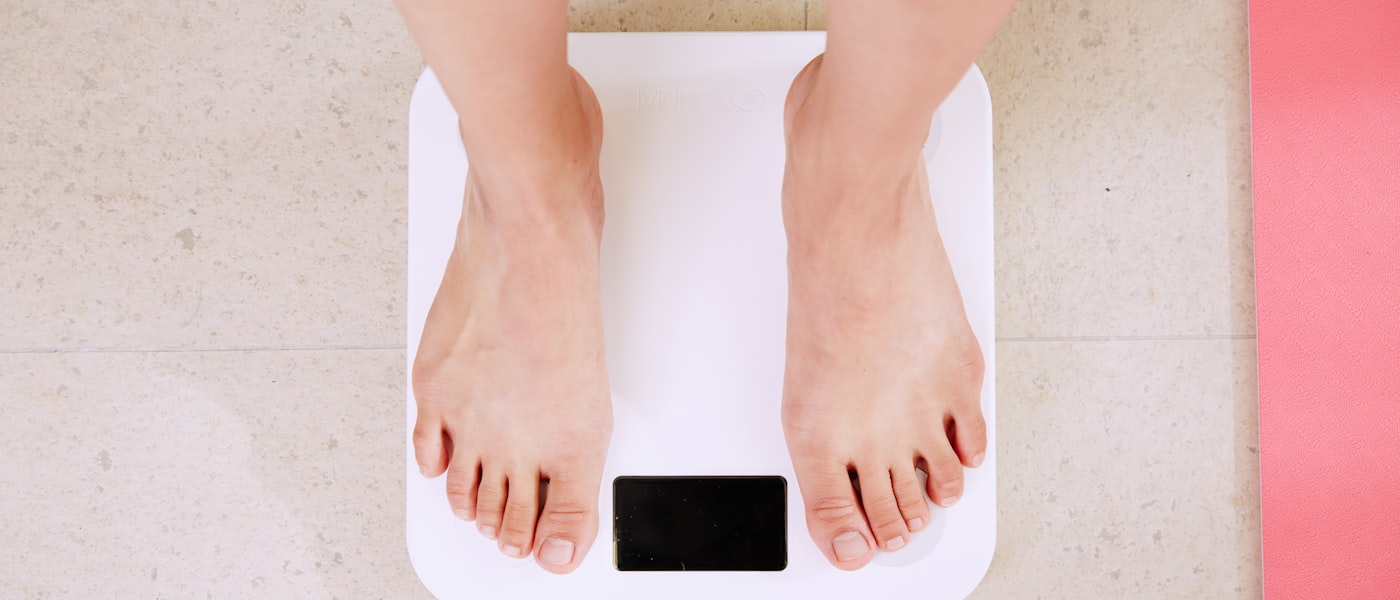
BMI categories, edge cases and better measures.
Dr. James Okonkwo


Photo via Unsplash
Health & Wellbeing
Every Health calculator on Calculadora.co.uk — free, fast and built for the UK.
Body-fat percentage, waist-to-hip ratio, heart-rate zones, pregnancy due date and more — NHS-aligned health calculators with the numbers explained in plain English.
33 calculators in this category · updated weekly
Maintained by Dr. James Okonkwo · Medical Reviewer
Estimate one-rep max for the bench press from a submaximal lift using Brzycki, Epley and Lombardi formulas.
Estimate deadlift one-rep max with Brzycki, Epley and Lombardi formulas and a percentage-of-1RM training table.
Estimate squat 1RM from a submaximal set using Brzycki, Epley and Lombardi, with a percentage-of-1RM table for training.
Convert any drink volume and ABV into UK NHS alcohol units (ABV × ml / 1000) with 14-units-per-week weekly guidance.
Plot a baby’s weight against WHO 0–24 month growth standards to get the percentile for their age and sex.
Estimate BAC using the Widmark formula from units drunk, body weight, sex and time — with the UK 80 mg/100 ml driving limit flagged.
Classify a BP reading into NHS bands — low, ideal, pre-high, stage 1 and stage 2 hypertension — with when to see a GP.
Estimate body fat using the US Navy tape method (waist, neck and — for women — hip circumference) with NHS-aligned healthy ranges.
Compute body surface area (BSA) using the Du Bois and Mosteller formulas — commonly used for chemotherapy dosing and paediatric medicine.
Add up daily caffeine from coffee, tea, energy drinks and soft drinks, against the 400 mg safe-upper-limit (200 mg in pregnancy).
Work out the daily calorie deficit needed to lose weight at a safe rate of 0.5–1 kg per week, from TDEE and target loss.
Estimate daily carb intake in grams and as a percentage of calories, tuned to activity level and goal.
Predict an adult height estimate from parents’ heights and the child’s sex using the mid-parental method.
Estimate FTP from a 20-minute test (95% × average power) or ramp test, plus power zones 1–7 for training.
Estimate how much water you should drink each day based on body weight, activity level and climate — benchmarked against NHS guidance of 6–8 glasses.
Estimate daily fat intake in grams and percent of calories, separating saturated, unsaturated and omega-3 guidance.
Estimate the fertile window (typically 5 days before and 1 day after ovulation) from cycle length and last period date.
Work out your max heart rate and the five training zones (recovery, easy, tempo, threshold, VO₂ max) using age-adjusted formulas.
Estimate daily fluid needs by body weight, climate and activity, with early signs of dehydration and urine-colour reference.
Project a marathon finish time from a recent race (5K, 10K, half) using the Riegel and Cameron formulas.
Estimate maximum heart rate using Tanaka, Gellish or Fox-Haskell formulas, with cautions about accuracy by age and fitness.
Predict the next 6 cycles and ovulation days based on average cycle length and period length.
Predict your fertile window and ovulation day based on cycle length and last period — uses the 14-days-before-next-period midpoint.
Estimate your due date from LMP using Naegele's rule (+280 days) or from conception date, with current-week and trimester guidance aligned to NHS dating.
Work out gestational age in weeks and days from the LMP date or an ultrasound-estimated conception date.
Estimate healthy weight gain across pregnancy trimesters based on pre-pregnancy BMI and number of babies.
Work out daily protein needs in grams using body weight, activity level and training goal (fat loss, maintenance, muscle gain).
Interpret resting heart rate with NHS age-based bands and work out heart-rate reserve (HRR) against a max heart rate.
Convert between pace, speed and time over any distance — plus split times for 5K, 10K, half and full marathon targets.
Work out the best bedtime or wake-up time so you complete full 90-minute sleep cycles and wake refreshed.
Estimate VO₂ max from the Cooper test, Rockport walk test, or max HR — with fitness-category banding.
Compare a waist measurement to NHS/WHO cardiometabolic risk cut-offs (94/102 cm men, 80/88 cm women) with action advice.
Divide your waist circumference by your hip circumference to get the WHR — the WHO uses it alongside BMI to flag visceral-fat risk.
Work out your max heart rate and the five training zones (recovery, easy, tempo, threshold, VO₂ max) using age-adjusted formulas.
Estimate maximum heart rate using Tanaka, Gellish or Fox-Haskell formulas, with cautions about accuracy by age and fitness.
Interpret resting heart rate with NHS age-based bands and work out heart-rate reserve (HRR) against a max heart rate.
Estimate VO₂ max from the Cooper test, Rockport walk test, or max HR — with fitness-category banding.
Estimate one-rep max for the bench press from a submaximal lift using Brzycki, Epley and Lombardi formulas.
Estimate deadlift one-rep max with Brzycki, Epley and Lombardi formulas and a percentage-of-1RM training table.
Estimate squat 1RM from a submaximal set using Brzycki, Epley and Lombardi, with a percentage-of-1RM table for training.
Estimate daily carb intake in grams and as a percentage of calories, tuned to activity level and goal.
Estimate daily fat intake in grams and percent of calories, separating saturated, unsaturated and omega-3 guidance.
Work out daily protein needs in grams using body weight, activity level and training goal (fat loss, maintenance, muscle gain).
Estimate the fertile window (typically 5 days before and 1 day after ovulation) from cycle length and last period date.
Predict the next 6 cycles and ovulation days based on average cycle length and period length.
Predict your fertile window and ovulation day based on cycle length and last period — uses the 14-days-before-next-period midpoint.
Estimate body fat using the US Navy tape method (waist, neck and — for women — hip circumference) with NHS-aligned healthy ranges.
Divide your waist circumference by your hip circumference to get the WHR — the WHO uses it alongside BMI to flag visceral-fat risk.
A quick glossary covering the controlled vocabulary we keep consistent across every calculator in this cluster.
BMI categories, edge cases and better measures.